
Neurofeedback vs. Medication: What’s the Difference?
Understanding the Basics: What Is Neurofeedback?
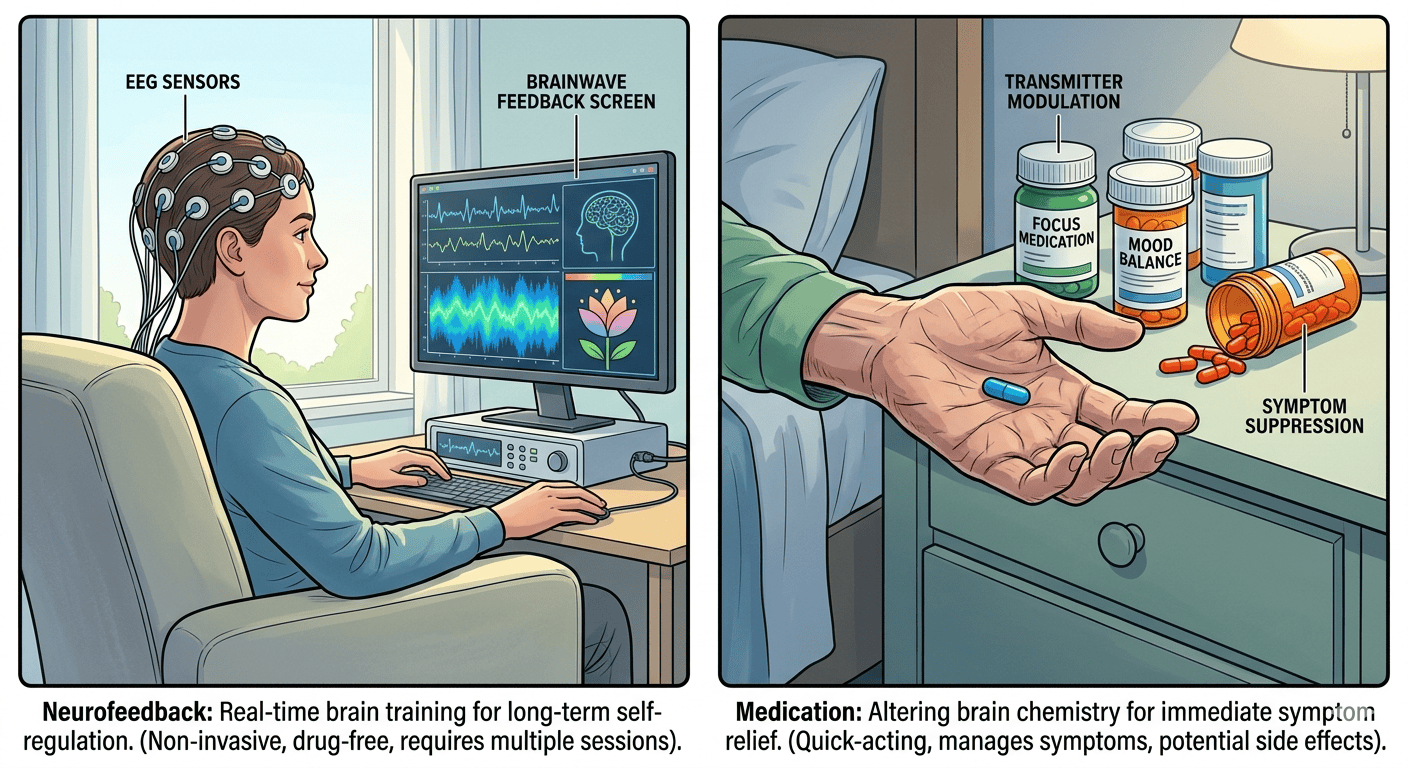
Neurofeedback is a form of brain training that uses real-time monitoring of brain activity (often via EEG) to help individuals learn how to optimize and regulate their brain patterns. Think of it as fitness for your brain training your neural circuits to function more efficiently and resiliently. It’s non-invasive, drug-free, and tailored to each person’s needs.
What Does Medication Do?
Medication, especially for conditions like ADHD, anxiety, or depression, typically works by altering brain chemistry. Stimulant and non-stimulant medications increase or balance certain neurotransmitters to help improve focus, reduce impulsivity, or lift mood. These treatments can offer fast-acting symptom relief and are often prescribed by medical professionals.
Key Differences: Neurofeedback vs. Medication
Immediate Relief vs. Long-Term Brain Training
Medication often provides quick relief from symptoms helping individuals concentrate, calm hyperactivity, or manage mood swings within hours of taking a dose.
Neurofeedback doesn’t work instantly. It requires multiple sessions, during which the brain gradually learns healthier patterns.
Root Cause vs. Symptom Management
Medication mainly manages symptoms by influencing brain chemistry.
Neurofeedback aims to enhance self-regulation training brain itself to function better without the need for ongoing medication.
Side Effects and Risk Profiles
Neurofeedback is generally well-tolerated with minimal side effects because it doesn’t involve drugs.
When to Consider Each Approach
Neurofeedback May Be Best If You Want:
A drug-free option with lasting benefits
To target the underlying brain regulation mechanisms
To reduce dependency on ongoing medication
Medication Could Be Best When:
Immediate symptom control is needed
You’re in a crisis or acute phase
Combined approaches are recommended (e.g., therapy + meds + neurofeedback)
Can You Use Both Together?
Absolutely. Many clinicians adopt a blended model using medication for initial symptom control while introducing neurofeedback to build durable self-regulation skills. This way, medication supports immediate needs while neurofeedback promotes long-term brain health and function
Real People, Real Neuroscience
Neurofeedback trains your brain medication supports it. Both have roles to play. The best path depends on your goals, needs, and how your body responds.
Final Thought: Choose What Fits Your Brain
There’s no one-size-fits-all answer but with growing research and meaningful feedback from participants, neurofeedback continues to be recognized as a powerful alternative or complement to medication for many individuals seeking better focus, emotional balance, or cognitive performance.

About the Author
“Melissa Hergert is the Founder and CEO of Brain Train Centers and CoFounder of Brain Train Nation. She is Board Certified in Neurofeedback Therapy and Amen Clinic Brain Coach Certified.
She is dedicated to educating communities about the power of neurofeedback and how it can help the brain heal and overcome many mental health symptoms.”
