
Neurofeedback for Autism Spectrum Support
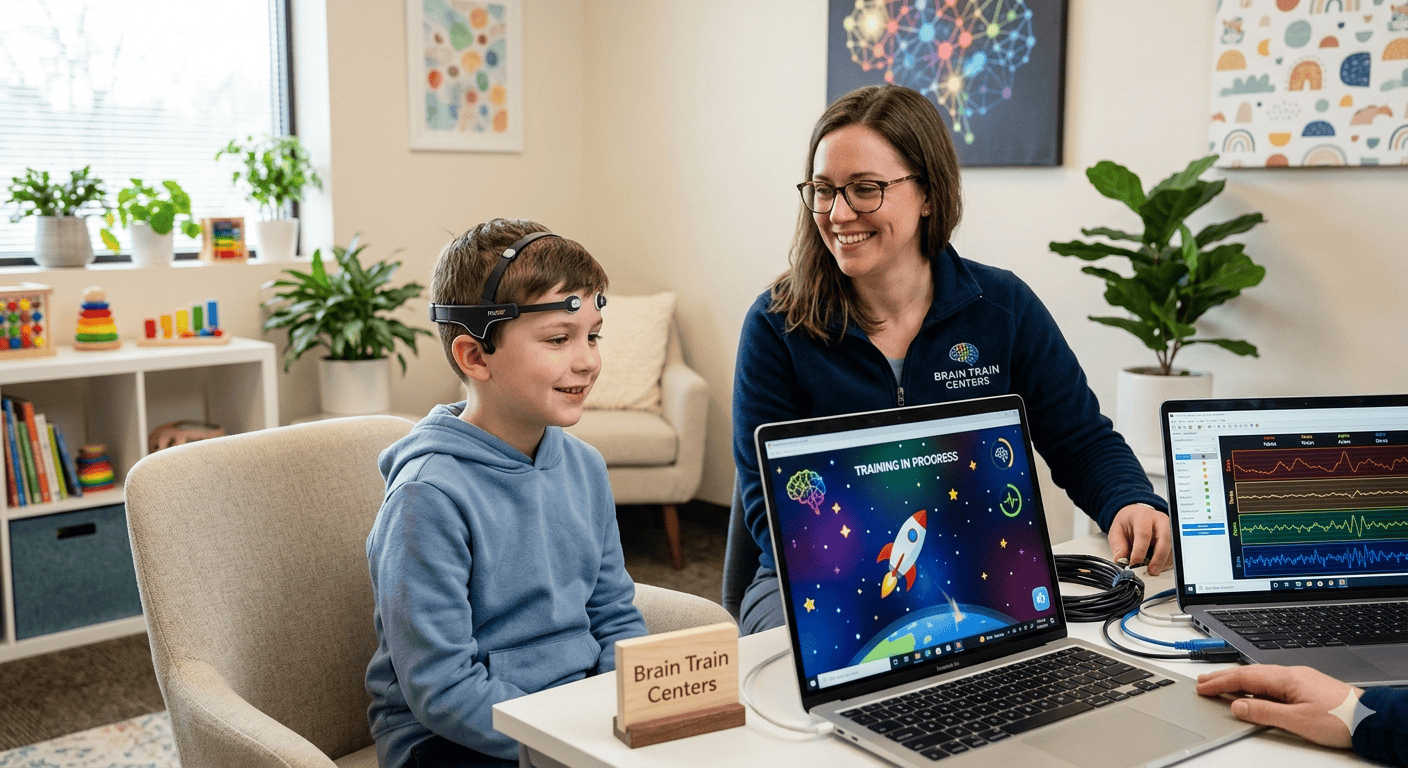
For many individuals on the Autism Spectrum and the families who support them the journey toward improved communication, emotional balance, and everyday ease can feel overwhelming. At Brain Train Centers, we believe that meaningful change begins in the brain. That’s why more families than ever are exploring neurofeedback for Autism Spectrum support as a natural, non-invasive way to help the brain function more smoothly and efficiently.
In this blog, we’ll walk you through what neurofeedback is, how it supports the autistic brain, and why this gentle brain-training method is becoming a trusted option nationwide.
Why Does Neurofeedback Matter for Autism?
Neurofeedback is a form of advanced brain training that uses real-time EEG technology to help the brain regulate itself. During a session, sensors measure brainwave activity, and the system provides instant audio and visual feedback, helping the brain shift into healthier patterns.
For individuals on the Autism Spectrum, neurofeedback offers a safe and comfortable experience, one that is non-invasive, medication-free, and fully customized based on brainwave patterns. Many clients describe it as relaxing, since it often feels like watching a movie, listening to music, or playing a simple interactive game.
How Neurofeedback Supports Individuals on the Autism Spectrum
Everyone on the Autism Spectrum is beautifully unique, which is why neurofeedback focuses on individualized brain patterns instead of a one-size-fits-all model. This personalized approach can support a wide variety of challenges commonly associated with ASD.
Enhanced Emotional Regulation:
Many individuals with ASD experience strong sensory or emotional responses. Neurofeedback trains the brain to shift into calmer states, helping reduce meltdowns, overwhelm, and emotional intensity.
Improved Focus and Attention:
By balancing brainwave activity, neurofeedback can support better concentration, task engagement, and processing speed. This can make learning and daily tasks feel more manageable.
Better Social Communication:
Strengthening brain regions related to awareness, processing, and language can improve eye contact, speech, and non-verbal communication cues.
Reduced Sensory Overload:
Healthier, regulated brain rhythms help make sensory experiences—sounds, lights, and textures less overwhelming.
Improved Sleep Patterns:
As the brain learns to settle into more stable rhythms, many individuals experience deeper, more restful sleep and improved daytime mood.
Why Families Choose Brain Train Centers
At Brain Train Centers, we combine advanced neurofeedback technology with a compassionate, individualized approach. Our team takes time to understand each person’s strengths, challenges, and goals before designing a customized neurofeedback program.
Parents appreciate our calm, kid-friendly environment, measurable progress tracking, and the way neurofeedback improvements show up in school performance, emotional stability, communication, and daily life. Our mission is simple: to help the brain function at its best so the individual can thrive at their best.
What to Expect During a Neurofeedback Session
If you’re new to neurofeedback, here’s what the process typically looks like:
1. Brain Mapping (QEEG)
We begin by measuring brainwave activity to identify patterns related to stress, focus, sensory processing, emotional regulation, and more.
2. Personalized Training Plan
Your neurofeedback program is custom-designed based on your unique brain map and personal goals.
3. Comfortable Training Sessions
During sessions, you can relax while watching a movie or listening to audio as the system provides real-time feedback that teaches the brain to self-regulate.
4. Ongoing Progress Tracking
We monitor improvements in areas such as mood, communication, sleep, behavior regulation, and overall functioning.
Is Neurofeedback Safe for Autism Spectrum Individuals?
Absolutely. Neurofeedback is a non-invasive, painless, medication-free, and evidence-based method suitable for children, teens, and adults. It is considered a gentle and supportive option for individuals seeking natural brain regulation without side effects or disruptions to daily routines.
Explore Neurofeedback for Autism Spectrum Support at Brain Train Centers
At Brain Train Centers, we’re here to support your journey with science-backed methods, compassionate guidance, and personalized brain training solutions.
Reach out today to schedule a consultation and learn how neurofeedback can help your loved one thrive

About the Author
“Melissa Hergert is the Founder and CEO of Brain Train Centers and CoFounder of Brain Train Nation. She is Board Certified in Neurofeedback Therapy and Amen Clinic Brain Coach Certified.
She is dedicated to educating communities about the power of neurofeedback and how it can help the brain heal and overcome many mental health symptoms.”
