
Neurofeedback for Ehlers-Danlos Syndrome (EDS): Supporting Nervous System Regulation
If you or a loved one has been diagnosed with Ehlers-Danlos Syndrome (EDS), you already know that the condition involves much more than joint hypermobility. Many individuals with EDS experience a wide range of symptoms that can impact daily life, including chronic pain, fatigue, anxiety, dizziness, sleep disturbances, brain fog, and difficulty regulating stress.
While traditional treatments often focus on managing physical symptoms, growing attention is being given to the role of the nervous system in EDS. One emerging therapy that may help support nervous system regulation is neurofeedback.
What Is Ehlers-Danlos Syndrome?
Ehlers-Danlos Syndrome is a group of connective tissue disorders that affect the body's collagen. Because collagen is found throughout the body, EDS can impact multiple systems, including:
Joints and ligaments
Muscles and connective tissues
Blood vessels
Digestive system
Autonomic nervous system
Many individuals with EDS also experience related conditions such as:
POTS (Postural Orthostatic Tachycardia Syndrome)
Dysautonomia
Chronic fatigue
Migraines
Anxiety disorders
ADHD-like symptoms
Sensory sensitivities
Sleep difficulties
Although EDS is considered a connective tissue disorder, many symptoms are closely tied to how the nervous system functions.
The Nervous System's Role in EDS:
Research and clinical observations suggest that many people with EDS live in a state of chronic nervous system dysregulation.
The brain constantly receives signals from unstable joints, chronic pain, inflammation, and autonomic dysfunction. Over time, the nervous system may become "stuck" in a heightened state of vigilance or stress response.
This can contribute to symptoms such as:
Anxiety and panic attacks
Difficulty relaxing
Poor sleep quality
Brain fog
Difficulty concentrating
Sensory overwhelm
Fatigue despite sleeping
Increased pain sensitivity
Many individuals describe feeling as though their body is always "on alert," even when they are safe and resting.
How Neurofeedback May Help Individuals with EDS:
While neurofeedback does not treat or cure EDS itself, it may help address many of the neurological and autonomic symptoms that commonly accompany the condition.
1. Improved Nervous System Regulation:
Many individuals with EDS experience chronic sympathetic nervous system activation, often referred to as "fight-or-flight mode."
Neurofeedback may help the brain improve its ability to shift into a calmer, more regulated state, reducing feelings of overwhelm and chronic stress.
2. Reduced Anxiety:
Anxiety is extremely common in EDS and is often influenced by both physical and neurological factors.
By improving regulation in brain regions involved in emotional processing and stress response, neurofeedback may help reduce anxiety symptoms and improve resilience.
3. Better Sleep:
Sleep disturbances are among the most common complaints reported by individuals with EDS.
Neurofeedback can help promote healthier brainwave patterns associated with relaxation and restorative sleep, allowing the nervous system to recover more effectively overnight.
4. Improved Focus and Reduced Brain Fog:
Many individuals with EDS report difficulty concentrating, forgetfulness, mental fatigue, and cognitive slowing.
By improving communication between brain networks and enhancing regulation, neurofeedback may help support attention, processing speed, and mental clarity.
5. Support for POTS and Dysautonomia Symptoms:
Although neurofeedback does not directly treat POTS or dysautonomia, improved nervous system regulation may help reduce some of the stress-related amplification of symptoms.
Many clients report improvements in overall resilience, stress tolerance, and their ability to recover from daily demands.
6. Pain Management Support:
Chronic pain affects how the brain processes sensory information.
Neurofeedback may help regulate pain-processing networks and reduce the nervous system's tendency toward heightened pain sensitivity. Many individuals report improvements in pain coping and quality of life.
What Does a Neurofeedback Program Look Like?
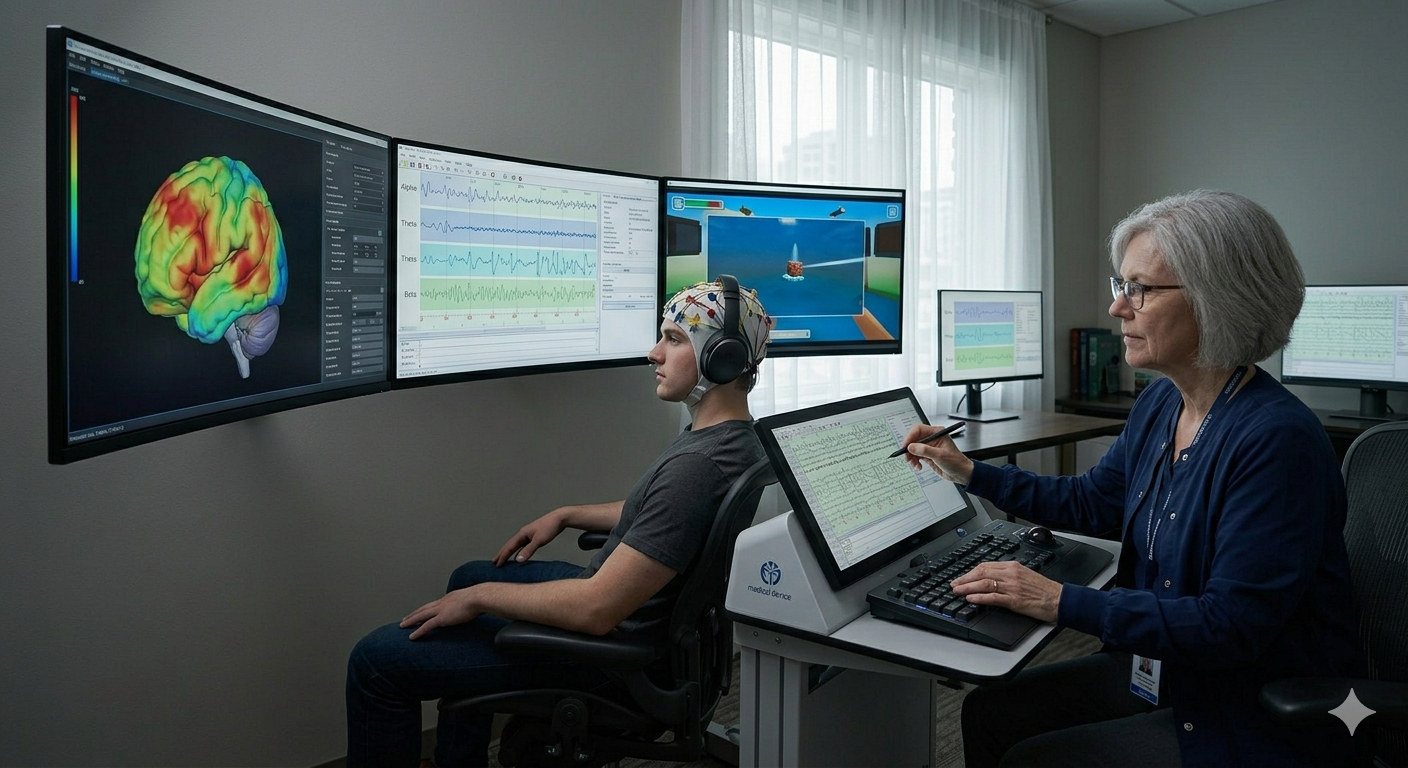
At Brain Train Centers, we begin with a comprehensive QEEG Brain Map.
This assessment allows us to evaluate brainwave patterns and identify areas of dysregulation that may be contributing to symptoms such as:
Anxiety
Brain fog
Sleep disturbances
Fatigue
Emotional dysregulation
Attention difficulties
Based on the results, we create an individualized neurofeedback training plan tailored to each person's unique brain activity and symptom presentation.
Most clients participate in a series of training sessions over several months, with progress monitored along the way.
A Whole-Person Approach:
EDS is a complex condition that affects multiple body systems. Neurofeedback works best as part of a comprehensive wellness plan that may include:
Medical care
Physical therapy
Nutritional support
Sleep optimization
Stress management
Lifestyle modifications
When the brain and nervous system become more regulated, many individuals find they are better able to cope with the physical challenges associated with EDS.
Final Thoughts:
Living with Ehlers-Danlos Syndrome can be exhausting, especially when symptoms extend far beyond joint pain and hypermobility. Anxiety, fatigue, brain fog, poor sleep, and autonomic dysfunction can significantly impact quality of life.
While neurofeedback is not a cure for EDS, it may offer a powerful way to support nervous system regulation and help individuals feel calmer, more focused, more resilient, and better equipped to navigate daily life.
If you're curious whether neurofeedback may be a good fit for you or your child, a QEEG Brain Map can provide valuable insight into how the brain is functioning and where targeted support may help.
Schedule a QEEG Brain Map:
Brain Train Centers specializes in personalized neurofeedback programs designed to help clients improve brain function, emotional regulation, sleep, focus, and overall nervous system health.
Contact us today to learn more about how neurofeedback may support your wellness journey.

About the Author
“Melissa Hergert is the Founder and CEO of Brain Train Centers and CoFounder of Brain Train Nation. She is Board Certified in Neurofeedback Therapy and Amen Clinic Brain Coach Certified.
She is dedicated to educating communities about the power of neurofeedback and how it can help the brain heal and overcome many mental health symptoms.”
