
Neurofeedback for Depression: A Natural Option for Mood Support
Depression is more than just feeling sad. It can affect how you think, feel, and function in daily life. Low energy, lack of motivation, difficulty concentrating, and emotional heaviness can make even simple tasks feel overwhelming.
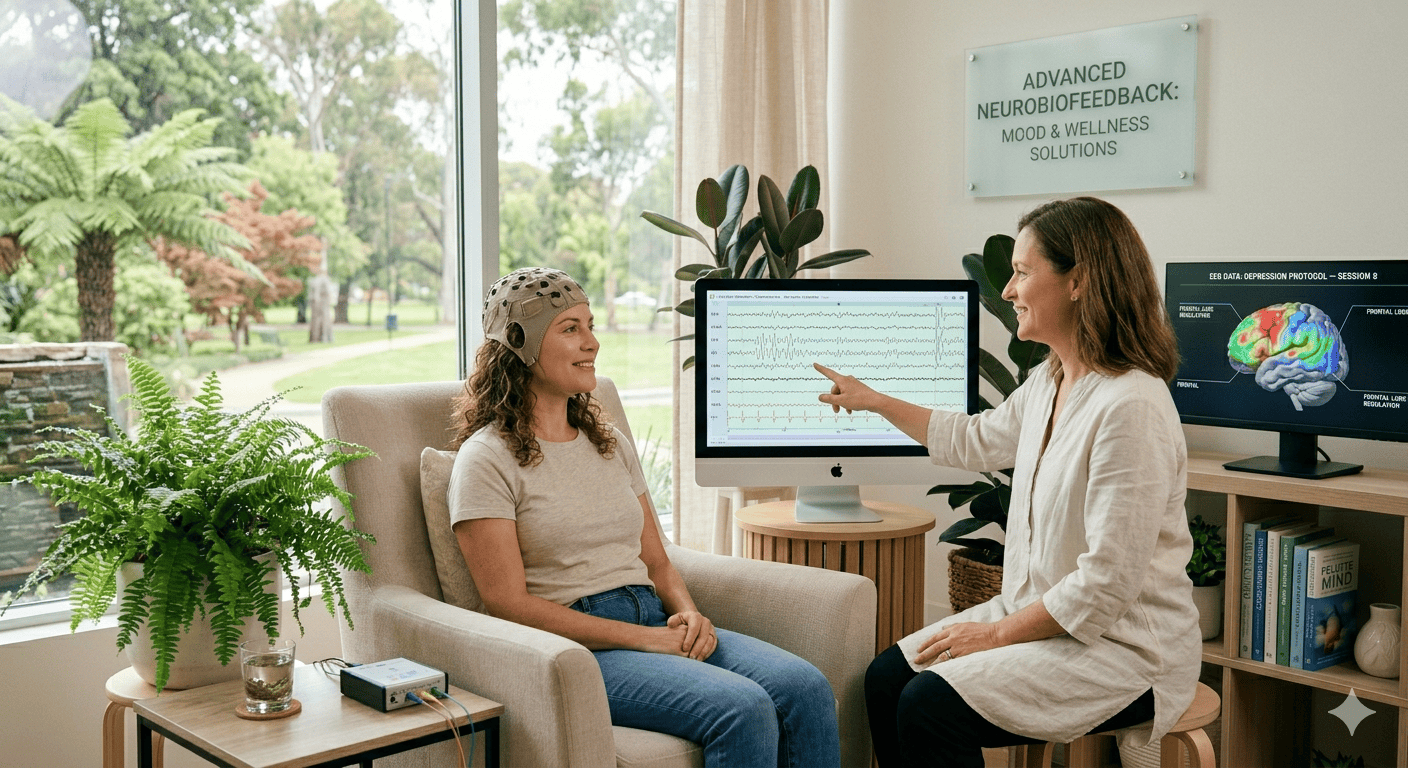
While traditional treatments like therapy and medication help many people, others are now exploring neurofeedback for depression as a natural way to support emotional balance and brain health.
Understanding Depression and the Brain:
Depression is closely linked to how the brain regulates mood and emotional responses.
In many cases, certain brainwave patterns may become imbalanced, making it harder to maintain a stable and positive mood.
This can lead to:
Persistent low mood
Difficulty focusing
Reduced motivation
Increased stress sensitivity
Instead of only addressing symptoms, neurofeedback for depression focuses on improving how the brain functions.
How Neurofeedback Supports Mood Improvement:
The brain relies on balanced activity to regulate mood. When certain areas become overactive or underactive, emotional challenges can develop.
Neurofeedback for depression helps by encouraging the brain to shift toward more balanced patterns.
Over time, this may lead to:
Improved emotional stability
Reduced negative thought patterns
Better stress management
Increased mental clarity
Rather than forcing change, the brain gradually learns to regulate itself more effectively.
A Natural, Drug-Free Approach:
One of the key benefits of neurofeedback for depression is that it does not involve medication.
For individuals who prefer a natural approach or want to complement other treatments—this can be a valuable option.
Neurofeedback is:
Non-invasive
Drug-free
Personalized to brain activity
Focused on long-term results
This makes it appealing for those seeking sustainable mental health support.
Why Consider Neurofeedback for Depression?
As more people look for holistic approaches to mental health, brain-based therapies are gaining attention.
Neurofeedback for depression stands out because it:
Targets brain function directly
Supports long-term improvement
Enhances overall cognitive health
Fits into a broader wellness strategy
Final Thoughts:
Depression can feel overwhelming, but new approaches are offering hope beyond traditional methods. By helping the brain function more efficiently, neurofeedback for depression provides a natural path toward improved mood, better emotional balance, and greater mental clarity. For those seeking a non-invasive and long-term solution, neurofeedback is becoming an increasingly popular choice.

About the Author
“Melissa Hergert is the Founder and CEO of Brain Train Centers and CoFounder of Brain Train Nation. She is Board Certified in Neurofeedback Therapy and Amen Clinic Brain Coach Certified.
She is dedicated to educating communities about the power of neurofeedback and how it can help the brain heal and overcome many mental health symptoms.”
