
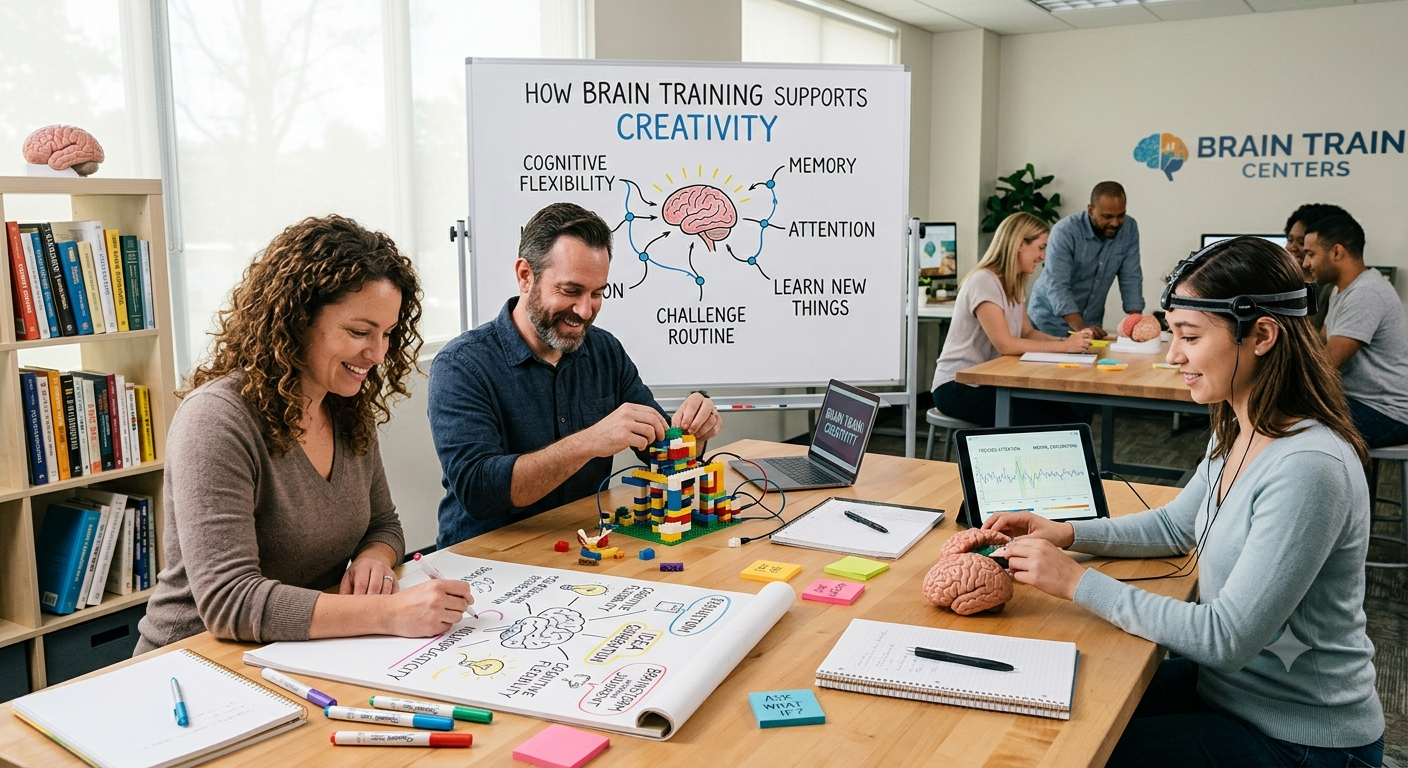
Creativity is often viewed as a talent that some people naturally possess while others do not. In reality, creativity is a cognitive skill that can be developed and strengthened over time. Whether you're an artist, entrepreneur, student, professional, or simply someone looking for fresh ways to solve problems, your brain has the capacity to become more creative.
Research continues to show that creativity is closely connected to brain function, mental flexibility, and the ability to form new connections between ideas. This is where brain training for creativity becomes valuable. By engaging the brain in specific activities and habits, individuals can improve their ability to generate ideas, think innovatively, and approach challenges from new perspectives.
Understanding how creativity works in the brain can help you unlock greater potential in both your personal and professional life.
What Is Creativity?
Creativity is the ability to produce original ideas, identify unique solutions, and make meaningful connections between concepts. It involves much more than artistic expression. Creativity plays an important role in:
Problem-solving
Decision-making
Communication
Leadership
Innovation
Learning
Adaptability
Every day, people use creativity to navigate challenges, develop strategies, and find better ways to accomplish goals.
The growing interest in brain training for creativity stems from the understanding that the brain can continue to learn and adapt throughout life. This ability, known as neuroplasticity, allows individuals to strengthen cognitive skills through consistent practice.
The Brain and Creative Thinking:
Creativity involves multiple regions of the brain working together rather than a single "creative center."
When generating ideas, the brain relies on networks responsible for:
Imagination
Memory
Attention
Emotional processing
Problem-solving
Cognitive flexibility
Creative thinking often occurs when different brain regions communicate efficiently and share information in new ways.
Scientists have found that highly creative thinking frequently involves balancing focused attention with moments of relaxed mental exploration. This combination allows the brain to discover connections that may not be immediately obvious.
Because creativity depends on complex brain processes, brain training for creativity focuses on strengthening the cognitive skills that support innovative thinking.
Why Creativity Matters More Than Ever:
In today's rapidly changing world, creativity is increasingly recognized as one of the most valuable skills for success.
Employers and educators often seek individuals who can:
Adapt to new situations
Solve complex problems
Generate innovative ideas
Think critically
Approach challenges with flexibility
Creativity is no longer limited to artistic professions. It plays a vital role in business, technology, healthcare, education, and countless other fields.
By investing in brain training for creativity, individuals can develop skills that support both professional growth and personal fulfillment.
How Brain Training Supports Creativity:
The brain functions much like a muscle. The more it is challenged in productive ways, the stronger certain cognitive abilities can become.
Improving Cognitive Flexibility:
Cognitive flexibility refers to the ability to shift perspectives and consider multiple solutions to a problem.
People with strong cognitive flexibility are often better able to:
Adapt to change
Explore new ideas
Think outside the box
Solve problems creatively
Many forms of brain training for creativity focus on strengthening this essential skill.
Enhancing Memory and Knowledge Integration:
Creative ideas often emerge when the brain combines information from different experiences and knowledge areas.
A strong memory system allows individuals to draw upon a wider range of information when generating new ideas.
Brain training activities that support memory and information processing can help create a stronger foundation for innovation.
Strengthening Attention and Focus:
Although creativity is often associated with free-flowing ideas, focus remains an important part of the creative process.
Concentration helps individuals:
Develop ideas more fully
Complete creative projects
Evaluate solutions effectively
Refine innovative concepts
Improving attention is another reason many people explore brain training for creativity as part of their personal development efforts.
Practical Ways to Train Your Brain for Creativity:
Creativity can be strengthened through daily habits and intentional mental exercises.
Learn Something New:
Exposing your brain to new information encourages the formation of new neural connections.
Consider:
Learning a new language
Taking a class
Reading outside your usual interests
Exploring unfamiliar topics
Novel experiences stimulate brain activity and support creative thinking.
Challenge Routine Thinking:
The brain naturally seeks efficiency, often relying on familiar patterns. While this can be helpful, it can also limit creative thinking.
Simple ways to challenge routine thinking include:
Taking a different route to work
Trying a new hobby
Approaching tasks from a different perspective
Exploring alternative solutions before making decisions
These activities support brain training for creativity by encouraging mental flexibility.
Practice Brainstorming Without Judgment:
Many people stop creative ideas before they have a chance to develop because they evaluate them too quickly.
During brainstorming sessions:
Generate as many ideas as possible
Avoid immediate criticism
Focus on quantity before quality
Allow unconventional thoughts to emerge
This process encourages the brain to think more freely and creatively.
Engage in Physical Exercise:
Exercise benefits more than physical health. Research shows that regular movement supports brain function, mood, memory, and cognitive flexibility.
Physical activity increases blood flow to the brain and may enhance the mental processes involved in creativity and innovation.
Prioritize Sleep:
Many creative breakthroughs occur after periods of rest. Sleep plays a critical role in memory consolidation, problem-solving, and idea generation.
Consistent, high-quality sleep supports the cognitive processes involved in brain training for creativity and overall mental performance.
The Role of Curiosity in Innovation:
Curiosity fuels creativity by encouraging exploration and learning.
People who ask questions, seek new experiences, and remain open to different perspectives often generate more innovative ideas.
To cultivate curiosity:
Ask "what if" questions
Explore unfamiliar viewpoints
Read broadly
Seek diverse experiences
Remain open to experimentation
Curiosity helps the brain discover new connections, which is a key ingredient in creative thinking.
Can Brain Training Programs Help?
Structured cognitive training programs may help strengthen some of the underlying skills associated with creativity.
These programs often focus on:
Attention
Memory
Processing speed
Cognitive flexibility
Problem-solving
At Brain Train Centers, brain-based training approaches are designed to support healthier cognitive functioning and improved mental performance. By strengthening core cognitive skills, individuals may be better equipped to think creatively, adapt to challenges, and generate innovative solutions.
While no program can instantly make someone more creative, supporting overall brain health can create conditions that encourage creative thinking to flourish.
Building a More Creative Mindset:
Creativity is not a fixed trait. It is a skill that can grow through consistent practice and intentional effort.
Individuals who regularly challenge their minds, seek new experiences, and remain curious often discover that creative thinking becomes more natural over time.
The goal of brain training for creativity is not simply to generate more ideas it is to develop the mental flexibility, focus, and cognitive strength needed to turn those ideas into meaningful outcomes.
Final Thoughts:
Creativity and innovation are valuable skills that can benefit every area of life. Whether you're solving workplace challenges, pursuing personal goals, or looking for new ways to learn and grow, creative thinking plays an important role in success.
The good news is that creativity is not limited to a select few. Through healthy habits, continuous learning, and brain training for creativity, individuals can strengthen the cognitive skills that support innovative thinking and problem-solving.
By investing in your brain today, you can build the foundation for greater creativity, adaptability, and innovation in the future.

About the Author
“Melissa Hergert is the Founder and CEO of Brain Train Centers and CoFounder of Brain Train Nation. She is Board Certified in Neurofeedback Therapy and Amen Clinic Brain Coach Certified.
She is dedicated to educating communities about the power of neurofeedback and how it can help the brain heal and overcome many mental health symptoms.”
