
If you're thinking about brain training for yourself or your child, you've probably already wondered how many neurofeedback sessions it will take before you see a difference. It's a fair question. The honest answer is that it depends on your brain, your goals, and how steadily you show up. Here's what to expect, so you can plan without guessing.
What Is Neurofeedback, and Why Does Session Count Matter?
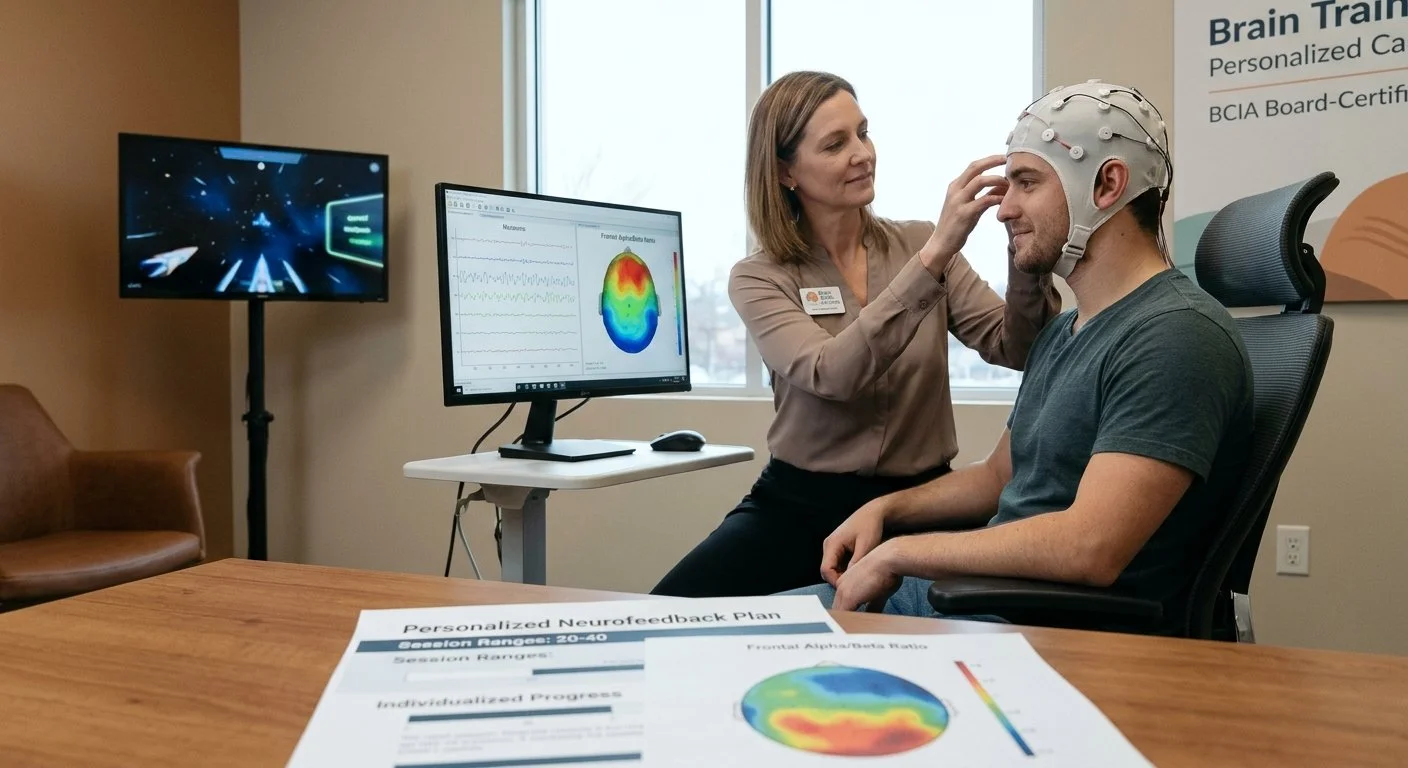
Neurofeedback is a drug-free, non-invasive form of EEG biofeedback. Small sensors pick up your brainwave activity, and a game, movie, or sound responds in real time whenever your brain produces calmer, more balanced patterns. Over time, your brain gets better at producing those patterns on its own.
Because this is closer to learning a skill than receiving a one-time treatment, repetition does the heavy lifting. That's why the session count matters so much.
The Typical Range:
How Many Neurofeedback Sessions Most Clients Complete
Most providers suggest a training block of roughly 20 to 40 sessions. Plenty of clients notice early shifts within the first 8 to 12 visits, like a calmer mood, easier focus, or better sleep. Others need more time, especially if their symptoms have been around for years.
It helps to picture training in three broad phases:
Sessions 1 to 10: Your brain is getting the hang of the feedback process. Some people notice small changes in mood, sleep, or focus.
Sessions 10 to 20: Changes tend to become steadier, and family members or coworkers may start noticing them too.
Sessions 20 to 40: Gains get reinforced and settle in, which makes them more likely to last.
These are general ranges, not guarantees. Brain Train Centers doesn't promise specific outcomes, because every brain works differently. You can read more in our results disclaimer policy.
What Affects Your Timeline?
A few things shape your plan:
Your goals: Sharpening focus for work looks different from working through long-standing anxiety.
How long symptoms have been present: Patterns that built up over many years often take longer to retrain.
Age: Children's brains are often very adaptable, and older adults can benefit too, though everyone responds differently.
Consistency: Training on schedule lets your brain build on each session instead of starting over.
Lifestyle: Sleep, stress, nutrition, and screen habits all affect how well new patterns stick.
Other care: Therapy and medical care often work best alongside neurofeedback.
How Many Neurofeedback Sessions for Common Concerns?
Again, these are general patterns, not promises:
Attention and focus: Families exploring neurofeedback for ADHD and attention often plan for a longer block, since attention skills build gradually.
Anxiety and mood: Clients working on stress, worry, or low mood usually notice change a little at a time. Learn more about anxiety and depression support.
Sleep: Some people notice sleep changes fairly early. See how neurofeedback may help with sleep issues.
Memory and cognitive aging: Progress is usually slow and steady, so a longer training window is common. Read about memory loss support.
The most reliable number comes from a brain map, not a blog post.
What to Expect at Your First Visit:
Your journey usually starts with a conversation about your goals and symptoms, followed by a QEEG brain map. During training, small sensors rest on your scalp and only read brainwave activity. You just watch a movie or play a game while the software responds to your brain. Sessions are comfortable and painless, and they usually run under an hour. For a full overview, see what to know before starting neurofeedback therapy.
Why Your QEEG Brain Map Shapes Your Plan:
A QEEG brain map records your brainwave activity and shows where patterns may be over- or under-active. Brain Train Centers uses it to personalize your protocol and care plan, so the answer to how many neurofeedback sessions you need reflects your brain, not a generic average.
From there, your provider tracks progress through symptom checklists, feedback from you or your child's teachers, sleep and mood notes, and periodic reassessment. The plan gets revisited as you go, which helps you avoid committing to more than you need.
How Often Should You Train?
Most clients train two to three times a week, especially early on. Frequency matters just as much as how many neurofeedback sessions you book. Spacing visits too far apart can slow your momentum, while a steady rhythm helps your brain lock in what it's learning.
Do Results Last After Training Ends?
Many clients taper their schedule once they've reached their goals, and some come back for occasional "tune-up" visits during stressful seasons. People often ask how many neurofeedback sessions they'd need to maintain their results. There's no universal answer, so it's best to talk it through with your provider as you near your goals.
A Realistic View Before You Commit:
Research on neurofeedback varies by condition, and you're welcome to review peer-reviewed studies yourself on PubMed. It's also smart to confirm provider credentials through the Biofeedback Certification International Alliance (BCIA). Brain Train Centers is BCIA Board-Certified. Neurofeedback isn't a replacement for medical care, so talk with your doctor before changing any medication.
Find Out How Many Neurofeedback Sessions Your Brain Needs:
You shouldn't have to guess. Schedule a QEEG brain map at your nearest Brain Train Centers location and get a personalized answer to how many neurofeedback sessions make sense for you and your family. Our BCIA Board-Certified team offers drug-free, non-invasive care for all ages.
Get Started Today or Contact Us to book your consultation.

About the Author
“Melissa Hergert is the Founder and CEO of Brain Train Centers and CoFounder of Brain Train Nation. She is Board Certified in Neurofeedback Therapy and Amen Clinic Brain Coach Certified.
She is dedicated to educating communities about the power of neurofeedback and how it can help the brain heal and overcome many mental health symptoms.”
