
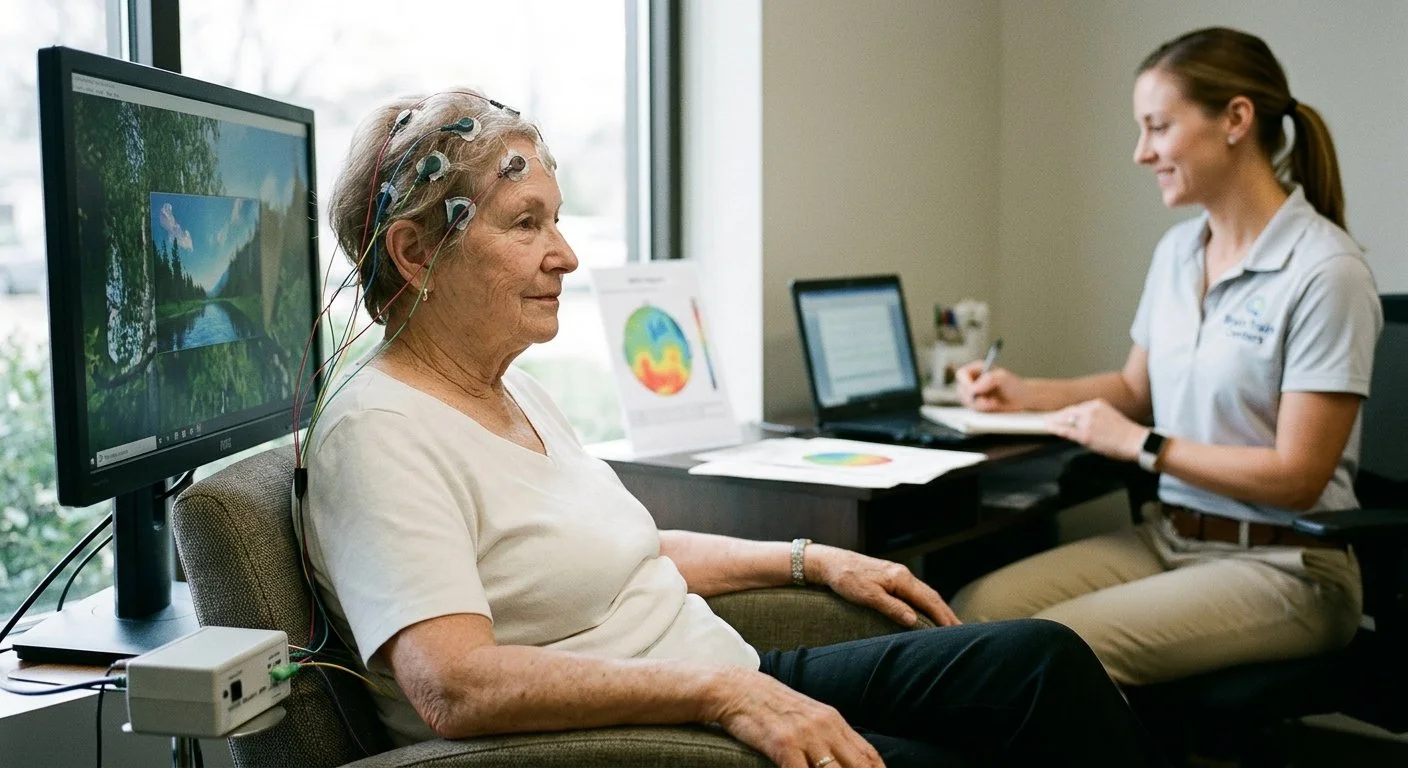
Few worries weigh on people as they age quite like the fear of losing memory, focus, and independence. Maybe you are searching for words more often than you used to, or you watched a parent struggle with everyday tasks and want to protect your own brain. Research on neurofeedback and cognitive decline is still developing, but it points to an encouraging idea: the brain remains adaptable well into later life, and training it may help support the skills you rely on every day.
What Is Cognitive Decline, and Can It Be Prevented?
Some mental slowing is a normal part of aging. Cognitive decline goes further, with changes in memory, attention, and thinking that begin to interfere with daily life. Mild cognitive impairment (MCI) sits between healthy aging and dementia, and it affects an estimated 10 to 15 percent of adults over 65.
Much of dementia risk is not fixed. The 2024 Lancet Commission on dementia identified 14 modifiable risk factors, including hearing loss, depression, physical inactivity, and social isolation. It estimated that 45 percent of future dementia could potentially be prevented if all 14 were eliminated. That is a theoretical ceiling, not a promise, but it shows that daily choices and early support matter. It is also where neurofeedback and cognitive decline research enters the conversation.
How Neurofeedback Works
Neurofeedback, also called EEG biofeedback, is a non-invasive, drug-free way to help the brain regulate itself. Sensors read your brainwave activity, and your own brainwaves control a game, movie, or sound in real time. When your brain moves toward healthier, more balanced patterns, the feedback rewards it. Over repeated sessions, the brain learns to produce those patterns more often.
Brain Train Centers begins with a QEEG brain map to see how your brain is functioning, then builds a personalized plan around what it shows.
What the Research Says About Neurofeedback and Cognitive Decline
Scientists have studied neurofeedback and cognitive decline in older adults who are aging healthily, living with MCI, or living with dementia. A 2021 systematic review of training protocols described neurofeedback as a potential complementary approach for people with dementia or MCI. A 2024 meta-analysis then looked specifically at working memory and episodic memory in older adults.
Another 2024 review reported that studies of healthy older adults found improvements in processing speed, executive function, attention, and working memory. Some small MCI studies also reported gains in memory and other cognitive skills after a series of training sessions.
It is important to be honest about the limits. Many of these studies are small, and they use different protocols, electrode placements, and outcome measures, which makes firm conclusions difficult. No study has proven that neurofeedback prevents dementia, and no ethical provider should promise that. What the evidence does support is that neurofeedback and cognitive decline deserve serious attention, especially as a supportive tool for memory, attention, and mental clarity.
Where Neurofeedback Fits in a Brain-Healthy Lifestyle
When it comes to neurofeedback and cognitive decline, think of training as one piece of a larger plan, not a replacement for medical care. Poor sleep, chronic stress, anxiety, and low mood can all make thinking feel foggier, and depression is one of the risk factors on the Lancet list. Because neurofeedback trains the brain toward more regulated activity, Brain Train Centers also supports clients with sleep issues, focus, and anxiety and depression.
The strongest approach pairs brain training with habits that protect the brain: regular exercise, managing blood pressure and blood sugar, treating hearing or vision loss, staying socially connected, and keeping your mind engaged.
Why Consider Brain Training Early?
If you are noticing mild forgetfulness, slower recall, or trouble concentrating, a QEEG brain map gives you a clear baseline that makes later changes easier to track. With neurofeedback and cognitive decline in mind, starting while concerns are still mild also gives you time to build supportive habits alongside your training.
Take the First Step Toward a Healthier Brain
Protecting your memory does not have to wait for a diagnosis. If you are curious about neurofeedback and cognitive decline, or you want a clearer picture of how your brain is working today, Brain Train Centers, a BCIA board-certified neurofeedback provider, is ready to help. Schedule your brain map and consultation at Brain Train Centers and take the first step toward a brain-healthy future.

About the Author
“Melissa Hergert is the Founder and CEO of Brain Train Centers and CoFounder of Brain Train Nation. She is Board Certified in Neurofeedback Therapy and Amen Clinic Brain Coach Certified.
She is dedicated to educating communities about the power of neurofeedback and how it can help the brain heal and overcome many mental health symptoms.”
